





The term “global education” has become increasingly prominent in discussions about children’s education. With growing interest in English-language learning, global education is sometimes associated with attending an international school or becoming fluent in English. Its purpose, however, extends well beyond language acquisition.
This article examines global education, how it differs from English-language education, and the three elements of global human resources identified by Japan’s Ministry of Education, Culture, Sports, Science and Technology (MEXT). It also considers the challenges facing education in Japan, the role families can play, and the ways in which global education is implemented in international school settings.
Global education is not simply learning English. It prepares young people to engage across cultural and national boundaries, understand perspectives different from their own, and respond thoughtfully to issues that extend beyond their immediate environment. Its significance becomes clearer when it is distinguished from language education.
Global education develops the capacity to understand diverse cultures and values, collaborate with others, think independently, and act with purpose in an increasingly interconnected world. In its report on promoting international education in primary and secondary schools, MEXT describes international education as developing the foundations of the attitudes and abilities needed to act independently from a global perspective in an internationalized society. The report also emphasizes a secure sense of self, acceptance and coexistence with others, and the ability to communicate and act.
English proficiency is an important component of global education, but it is not its defining purpose. Global education also encourages students to recognize different perspectives, consider issues of wider social significance, and participate constructively in society. It requires understanding others as well as awareness of one’s own assumptions, values, and cultural position.
English-language education primarily develops the ability to listen, speak, read, and write in English. Global education places language within a broader educational context. Language becomes a means of communicating ideas, understanding different perspectives, collaborating with others, and engaging with social and global issues.
The distinction is important. English proficiency is not an end in itself; its value lies partly in what it enables a person to do. Global education therefore emphasizes the purposeful use of language to communicate, question, collaborate, and address problems with people whose experiences and perspectives may differ from one’s own.
Globalization has intensified the movement of people, goods, information, and capital across national borders and deepened interdependence among societies worldwide.
Japan is an integral part of this change. Cross-border collaboration is increasingly common in business, research, education, and many other fields. Language proficiency remains important, but effective collaboration also requires understanding cultural differences, sensitivity to differing values, and the ability to build relationships of trust.
For children growing up in Japan, contact with people from diverse cultural backgrounds is likely to become increasingly common, regardless of where they eventually live or what careers they pursue. Education must therefore prepare them not only to communicate across languages, but also to approach differences with curiosity, judgment, and respect.

In the June 2012 report of the Council for the Promotion of Global Human Resource Development, MEXT organized the qualities associated with global human resources into three broad elements:
This framework is not the only way to conceptualize global competence, but it provides a useful reference point for considering the qualities and capabilities that education can help children develop.。
The first element is language proficiency and communication skills. This extends beyond the knowledge required to perform well on a language examination. It includes the practical ability to express ideas, understand another person’s meaning, respond appropriately, and develop mutual understanding through communication.
Communication also extends beyond spoken and written language. Facial expressions, gestures, context, and cultural conventions all influence how meaning is conveyed and interpreted. Grammatical accuracy matters, but accuracy alone does not make communication effective. Students also need to express their views clearly, listen attentively, and develop ideas through substantive exchange with others.
The second element concerns dispositions that shape how a person approaches learning, relationships, and unfamiliar situations. Initiative, flexibility, responsibility, cooperation, and a willingness to take on challenges cannot be developed through knowledge alone. They emerge gradually through experience and interaction with others.
Students benefit from opportunities to engage with questions that have no single correct answer, persist when solutions are not immediately apparent, and work with people who may interpret the same issue differently. Such experiences require negotiation, reflection, and responsibility for one’s own contribution.
It is equally important for students to move beyond completing tasks simply because they have been assigned. Questions such as “Why does this matter?” and “What can be done?” encourage a more active relationship with learning. Educational environments that make room for this kind of intellectual and personal initiative are central to meaningful global education.
The third element is understanding other cultures alongside a sense of identity as a Japanese person. Although discussions of global education often concentrate on English proficiency and international experience, questions of cultural identity are equally significant.
Meaningful engagement across cultures requires more than knowledge about other countries. It also requires awareness of one’s own cultural background and values, together with the ability to reflect on and articulate them. Within MEXT’s framework, this dimension is expressed specifically as “identity as a Japanese person.”
An international outlook and a strong understanding of one’s own language and cultural background are not opposing goals. A clearer understanding of one’s own perspective can, in fact, support a more nuanced recognition of perspectives different from one’s own. This is one reason Japanese language and culture remain important areas of learning within an international school environment.。

Rapid advances in artificial intelligence, together with continuing globalization, are changing the contexts in which today’s children will study, work, and participate in society. Knowledge remains essential, but young people will increasingly need to interpret information, communicate across differences, and respond to problems for which there may be no predetermined answer. These changes have brought renewed attention to global education in Japan.
TOEFL results have long been cited as one indicator of Japan’s relatively low English proficiency compared with other Asian countries. A June 2012 report by the Council for the Promotion of Global Human Resource Development placed Japan 135th among 163 countries. These results should not be attributed to the abilities of Japanese people themselves. Instead, attention should focus on the structural factors behind them, including the environment in which English is learned and used, as well as educational and psychological factors.
In Japan, English is not widely used in everyday life. Concerns about making mistakes or speaking in front of others can also make some learners hesitant to use English even when opportunities arise. Students may therefore spend years studying the language without enough opportunities to express their ideas, participate in meaningful discussion, or build understanding through interaction with others.
Global education involves more than language proficiency. It also develops the confidence and initiative to engage with people from different backgrounds. Students learn to think independently, articulate their views, and work through complex issues in dialogue with others. One important challenge for education in Japan is therefore to move beyond “knowing” English toward using English to think, communicate, and engage meaningfully with others.
In August 2023, MEXT published the “Sekai × Manabi” Plan, positioning the development of globally capable people as a national educational priority.
The plan pursues this goal in three ways: expanding opportunities for people in Japan to study and engage internationally; attracting and supporting talented students and professionals from overseas; and further internationalizing education in Japan. Alongside stronger support for study abroad at the upper secondary and university levels, it includes international exchange through digital technologies and measures to strengthen English-language education in primary and secondary schools. The broader direction is clear: international engagement should develop progressively throughout a child’s education rather than be introduced only at the university level.

The benefits of global education extend beyond English proficiency. Sustained engagement with different cultures and values can help children recognize perspectives beyond their own and consider an issue from more than one point of view.
When students are expected to explain their reasoning, listen to people with different experiences, and work together on shared problems, communication and collaboration develop within a meaningful context. They also learn that differences in perspective do not preclude productive cooperation.
Global education can also strengthen flexible thinking and problem-solving. Questions without a single correct answer require students to tolerate uncertainty, examine evidence, revise their thinking, and consider alternatives. These capacities are valuable in further education, professional life, and a society characterized by rapid change.
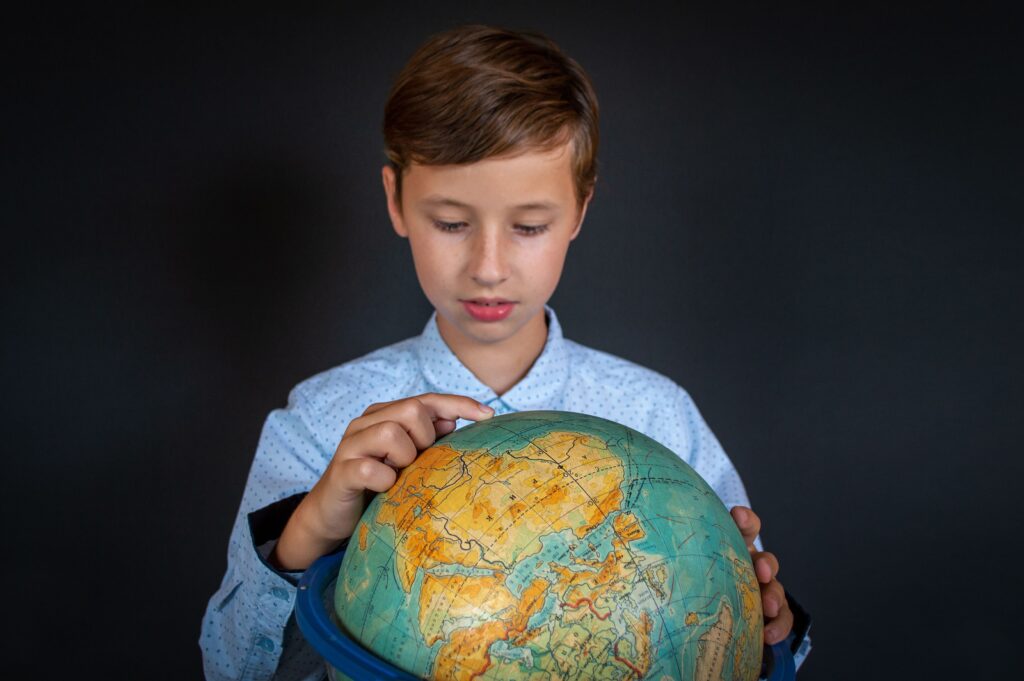
Global education becomes most meaningful when ideas are connected with experience. Schools can provide opportunities for students to investigate real issues, encounter perspectives beyond their immediate environment, and communicate what they have learned. Families can also encourage similar habits of inquiry.
One important approach is inquiry that crosses traditional subject boundaries and engages students with social and international themes. Global learning need not be confined to the English classroom.
For example, students at a Japanese junior high school investigated a waste disposal site in the Philippines, conducted interviews in English, and communicated their findings. At another high school, students shared experiences related to the Great East Japan Earthquake in English and discussed them with peers overseas.
The educational value of such work lies not simply in exposure to “global topics.” Students formulate questions, seek and evaluate information, communicate with others, and determine how to present what they have learned. Through this process, they develop greater independence of thought and a more informed understanding of perspectives beyond their own.
グGlobal education is not confined to schools or specialized programs. The home environment can also play an important role in fostering children’s curiosity about, and openness to, the wider world.
The emphasis should not be on providing children with immediate “correct” answers, but on encouraging them to question, explore, and think critically. Parents’ interest in global issues and different cultures can further help children develop a broader awareness of perspectives beyond their own.
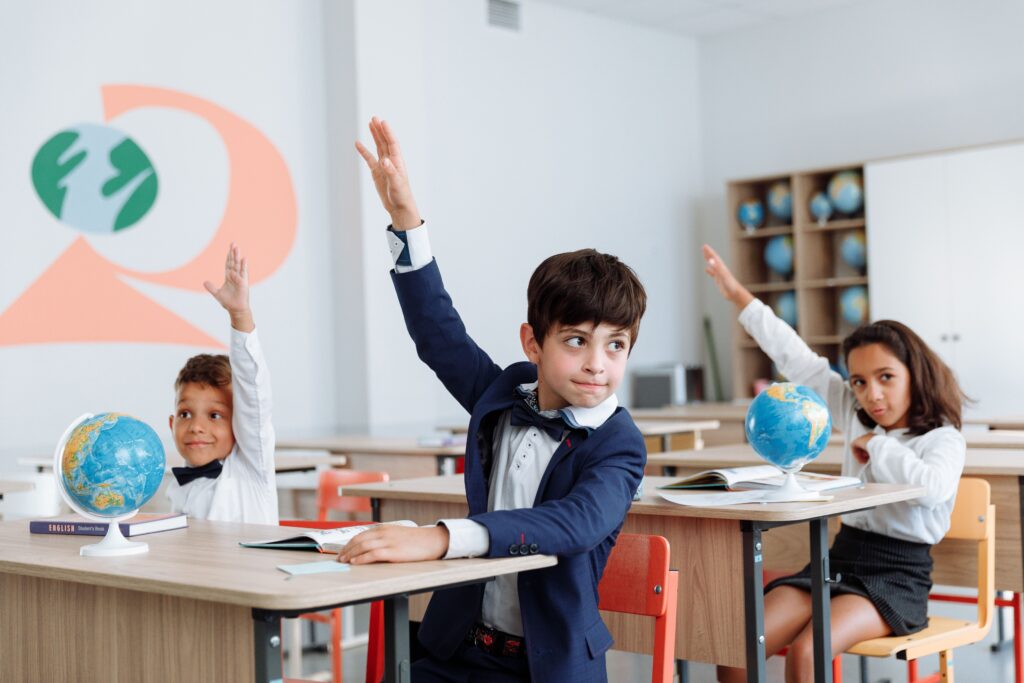
International schools can provide a particularly rich environment for global education because cultural and linguistic diversity is part of everyday school life, not an occasional experience. Their educational value, however, lies not simply in using English or having students from different countries, but in how that diversity is incorporated into learning.
In many international schools, children from different national, linguistic, and cultural backgrounds learn together every day. Students encounter different perspectives not only through special projects, but also through everyday classroom discussions, friendships, collaborative work, and school life.
English functions as a language for learning and communication rather than solely as a subject of study. In schools offering internationally recognized curricula such as the International Baccalaureate (IB), inquiry-based learning also gives students regular opportunities to formulate questions, examine ideas, and learn collaboratively. These experiences can support the development of language and communication skills, initiative, and intercultural understanding – qualities also reflected in MEXT’s framework for global human resources.
The distinction is not simply about how many hours English is used. When language is used to learn, solve problems, negotiate meaning, and build relationships, it becomes integral to participation in the learning process. This sustained use of language is an important dimension of global education in an international school setting.
Yoyogi International School is an IB World School authorized to offer the International Baccalaureate Primary Years Programme (PYP). Children from diverse national and cultural backgrounds learn together, with English serving as the principal shared language of learning.
Inquiry is central to the learning process. Students are encouraged to formulate their own questions, examine information critically, and deepen their understanding through discussion with others. Over time, these experiences can strengthen communication, initiative, intercultural understanding, and the capacity to approach complex issues thoughtfully.
Japanese-language education is also an important part of the curriculum at Yoyogi International School. Even when English is the principal language of learning, opportunities to develop Japanese proficiency and deepen understanding of one’s linguistic and cultural background remain important. An international perspective need not develop at the expense of a strong understanding of one’s own language and culture; both are important dimensions of an international education.
Global education is not another term for English-language education. It is a broader educational approach that develops the capacity to communicate across differences, think independently, understand other perspectives, and participate responsibly in an interconnected world. MEXT’s framework identifies language and communication, initiative, and intercultural understanding as important dimensions of this development, while the “Sekai × Manabi” Plan reflects the growing place of international engagement in Japan’s education policy.
Global education can begin with everyday conversation, curiosity, and exposure to perspectives beyond one’s immediate environment. For families seeking an educational setting in which children use language purposefully, learn through inquiry, and engage daily with people from different backgrounds, an international school can be a strong option. The more important consideration, however, is not whether a school is described as “international” or which language it uses. It is the quality of the intellectual, cultural, and social environment in which children learn and develop.


Yuko Muir
Doctor in International Psychology
Yoyogi International School | Founder and CEO
Founder and CEO of Yoyogi International School with over 27 years of experience in school leadership. Holds a Ph.D. in International Psychology and draws on extensive practical and academic background to explore key issues in education.