

In today’s information-rich world, education that fosters not just the ability to acquire knowledge, but the ability to discern information is highly sought after. “Critical thinking” is garnering particular attention in this context.
This article explains everything from the basic concepts of critical thinking to the benefits it brings to children in an easy-to-understand manner. It also highlights the approaches used in educational settings to foster critical thinking, providing valuable insights for parents.
Critical thinking is a way of thinking that involves examining information and opinions from multiple perspectives based on evidence and background, rather than simply accepting them at face value. Acquiring this skill from childhood leads to independent decision-making.
Here, the overview and components of critical thinking are explained.
While the Japanese translation often carries the nuance of “criticism,” the word “critical” in this context does not mean denial or attack. The definition of critical thinking is “to examine things logically, objectively, and multilaterally based on evidence.”
Since it is important to carefully examine information by checking its grounds and premises rather than just accepting it, the ability to objectively assess validity while respecting others’ opinions is required. By adopting this critical thinking mindset, one can navigate a constructive process to reach a better conclusion while avoiding emotional conflicts.
Critical thinking consists of the following four elements:
By repeating this flow, the precision of one’s thinking can be significantly improved.
Logical thinking and critical thinking may seem similar, but their roles differ. Logical thinking is a method of deriving a conclusion systematically based on a given premise. On the other hand, critical thinking begins by questioning whether the premise itself is correct.
In other words, critical thinking is a method that not only structures logic but also verifies the validity of the starting point. By learning critical thinking, students can acquire more flexible and profound thinking skills.

In modern society, the environment surrounding children is changing rapidly. While situations with a single correct answer are decreasing, situations requiring independent thought and judgment are increasing. Given this background, the importance of critical thinking in school education is growing year by year, gaining attention as a crucial skill for the future.
Here, the importance of critical thinking in education is explained.
The modern age is often called the “VUCA era”—an acronym for Volatility, Uncertainty, Complexity, and Ambiguity. It represents an era of rapid social and economic change where the future is difficult to predict.
As a result, it is becoming increasingly difficult to address unknown challenges by relying solely on past success experiences or existing knowledge. At the same time, the ability to pose questions and examine information from multiple perspectives is more highly demanded than ever before. In this context, critical thinking is drawing attention as the ability to make judgments while reviewing the validity of prerequisites.
Furthermore, critical thinking occupies a core position within the “Ways of Thinking” category of 21st-century skills, and its evaluation is rising in the international community. We have entered an era where the presence or absence of this thinking skill makes a significant difference in academic advancement and employment.
With the spread of the internet and social media, we are exposed to massive amounts of information daily. However, this includes misinformation and intentionally manipulated content. In such an environment, it is crucial to verify the grounds and sources rather than accepting information at face value.
Children equipped with critical thinking will develop the ability to make calm judgments while assessing the reliability of information. They also develop the habit of thinking from multiple perspectives without being swayed by one-sided opinions. As a result, they become capable of making decisions based on their own values, acquiring the strength to live proactively in an information society.
It has been pointed out that the cultivation of critical thinking is not progressing sufficiently in Japanese educational settings. In the 2024 Teaching and Learning International Survey (TALIS) conducted by the OECD (based on Ministry of Economy, Trade and Industry data), the percentage of Japanese teachers who answered that they “present tasks that require critical thinking” fell significantly below the international average.
The average for participating countries was 58.1% for elementary school teachers and 61.2% for junior high school teachers. In contrast, Japan’s figures stood at only 19.5% for elementary schools and 24.2% for junior high schools, showing a vast gap. This result indicates that traditional classes emphasizing knowledge acquisition still remain the mainstream. Moving forward, a shift will be required toward education that fosters the ability to ask questions and think, rather than just arriving at the correct answer.

Critical thinking goes beyond being a mere cognitive skill; it has a profound impact on a child’s learning and future choices. As education shifts from merely acquiring knowledge to learning how to think and judge independently, its value will continue to rise.
Here are three benefits children can gain by learning critical thinking.
Children who have cultivated critical thinking do not make judgments based solely on superficial events when faced with a problem. They learn to dig deeper into why the problem occurred and examine the causes from multiple perspectives.
By continuously asking questions like, “Is this really the cause?” or “Is there another way to look at this?”, the depth of their thinking increases. By repeating this process, children break away from memorization-centric study and foster applied skills based on true understanding. Consequently, a proactive attitude toward independent thinking and learning naturally takes root.
Critical thinking is deeply connected to the ability to engage with others while reviewing one’s own thoughts. Therefore, an added benefit of mastering critical thinking is the simultaneous improvement of communication and dialogue skills. Even when encountering differing opinions, children learn the attitude of trying to understand the background and reasoning without emotionally denying them. Building on this, they enhance their ability to organize their own opinions and convey them to others.
By engaging in such dialogue repeatedly, mutual understanding is deepened, and more constructive communication can be generated. This skill is polished even more practically in environments exposed to diverse values.
Another advantage is that children equipped with critical thinking become less susceptible to being swayed by the evaluations of others or superficial information. When considering their future paths, they become capable of making choices based on what is valuable to them, rather than relying solely on standard test scores or brand recognition.
Furthermore, it is highly beneficial that they develop the ability to make decisions while facing the question, “Why am I choosing this?” Through this thought process, they will understand their interests and strengths more deeply. As a proactive attitude toward the future is formed, it will prove highly useful in their career choices.

Did you know that critical thinking is not a skill acquired naturally, but one fostered through planned instruction and environment building? In current educational settings, learning that focuses on the process of thinking is heavily emphasized alongside knowledge acquisition.
Here, specific approaches are explained based on instructional perspectives, educational methods, and domestic case studies.
Instruction of intellectual activities related to critical thinking consists of the following four perspectives:
Conducting classes with these four perspectives in mind helps elevate the quality of children’s thinking skills. In turn, elevating the quality of thinking leads to deep learning that goes beyond simple knowledge acquisition.
There are four approaches to educational methods that foster critical thinking in children:
It is important to understand the features of each and appropriately adopt the optimal method according to the learning environment and objectives.
Practices to foster critical thinking are advancing in educational settings within Japan. In a class practice case study by the National Institute for School Teachers and Staff Development (NITS), a theme of “Is majority rule truly a democratic method?” was set in a junior high school social studies class, providing students an opportunity to rethink established premises.
As a result, students questioned ideas previously taken for granted and deepened their discussions from the perspectives of law and human rights. Such learning can be considered highly effective in raising the quality of thinking.
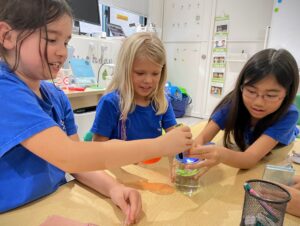
At international schools, education is conducted with critical thinking as its core. In particular, the IB PYP (Primary Years Programme) positions inquiry-based learning at the center of its education, heavily emphasizing the students’ attitude of posing their own questions. Instead of teachers unilaterally giving answers, the basic flow involves students researching, thinking, and discussing to deepen their understanding.
During this process, questions such as “Why does this happen?” and “Is this really correct?” naturally arise daily. Through the accumulation of these inquiries, a thinking ability that goes beyond superficial knowledge is naturally fostered. Additionally, perspectives for viewing things multilaterally are cultivated through the experience of encountering different opinions.
In class, the act of posing questions is itself an important learning activity. Students deepen their understanding by verbalizing their thoughts and sharing them with others. Opportunities also arise to re-evaluate their own premises while accepting the opinions of others. As this type of interactive learning takes place daily, the quality of thinking improves. A major feature is that value is placed not just on arriving at the correct answer, but on the thinking process itself.

Critical thinking is an essential skill for discerning information and making independent judgments using one’s own mind. In today’s so-called VUCA era, the attitude of thinking multilaterally while questioning premises is demanded, rather than simply memorizing correct answers. While its importance is growing in the educational field, it cannot yet be said that it is being sufficiently fostered in Japan. Therefore, choosing a learning environment that routinely deepens thinking is crucial.

Yuko Muir
Doctor in International Psychology
Yoyogi International School | Founder and CEO
Founder and CEO of Yoyogi International School with over 27 years of experience in school leadership. Holds a Ph.D. in International Psychology and draws on extensive practical and academic background to explore key issues in education.