





Many parents wonder when their child should begin learning English. Some also worry that starting too early might affect Japanese development.
The landscape of children’s English education has changed considerably in recent years. Yet Japan continues to face challenges in developing practical English proficiency. In the 2025 EF English Proficiency Index (EF EPI), published by EF Education First (EF), an international education company that provides language education and cultural exchange programs worldwide, Japan ranked 96th out of 123 countries and regions. Opportunities to learn English have expanded, but developing the ability to use the language effectively remains an important challenge.
This article examines when children can begin learning English, how learning approaches can change with age, what families and schools can provide, and what parents should consider when introducing English in early childhood.
English education in Japan has changed considerably, yet a familiar challenge remains: students may study English for years without developing the confidence or ability to use it effectively. It is therefore useful to consider Japan’s English proficiency in an international context and how English education in Japanese elementary schools has evolved.
According to the EF English Proficiency Index (EF EPI), published in November 2025 by EF Education First (EF), an international education company that provides language education and cultural exchange programs worldwide, Japan ranked 96th out of 123 countries and regions. It was placed in the “low proficiency” category and ranked 18th among 25 countries and regions in Asia.
For many years, English education in Japan placed considerable emphasis on grammar and translation. The focus has gradually shifted toward communication. Even so, helping students develop the ability to use what they have learned remains a challenge. Against this background, a growing number of families are looking beyond classroom instruction and considering ways to give their children greater exposure to English from an early age.
Following revisions to the national Course of Study by Japan’s Ministry of Education, Culture, Sports, Science and Technology, “Foreign Language Activities” were introduced for third- and fourth-grade students in the 2020 academic year, with 35 class periods per year. For fifth- and sixth-grade students, “Foreign Language” became a formal subject with 70 class periods per year and formal assessment. The revised curriculum places greater emphasis on developing listening, reading, speaking, and writing skills progressively throughout elementary school. Familiarity with English from early childhood, when introduced in an age-appropriate and enjoyable way, can also provide a natural foundation for later English learning at school.

Early childhood is a period of significant brain and auditory development, when children are particularly receptive to a wide range of sounds. This section considers when to introduce English from three perspectives: brain and auditory development, language acquisition, and the amount of exposure children receive.
A child’s brain is said to reach approximately 80 percent of its development by the age of four or five and approximately 90 percent by the age of six (Source: Growth and Development and Scammon’s Growth Curve, Katsunori Fujii, Graduate School of Business Administration and Computer Science, Aichi Institute of Technology). During this period of rapid brain development, children can also be highly receptive to the sounds and rhythms of language.
One important aspect is what Japan sometimes calls an “English ear”: the ability to distinguish sounds characteristic of English. Japanese and English have different sound systems. Japanese has five vowels—a, i, u, e, and o—while English is commonly described as having 12 vowel sounds and eight diphthongs. Exposure to English sounds during early childhood can help children become familiar with sounds that do not exist in Japanese, as well as with English’s distinctive rhythm, making it easier to perceive differences between them.
This does not mean that children must begin between the ages of zero and six to acquire English. The advantage of starting early lies in the opportunity to accumulate experience naturally over a longer period, beginning at an age when children are particularly receptive to the sounds of language.
Research on language acquisition includes a concept known as the “Critical Period.” This theory proposes that age can influence how readily certain aspects of a language are acquired. Early exposure is considered particularly advantageous for pronunciation and the ability to distinguish unfamiliar sounds.
In this discussion, around age eight is sometimes regarded as a developmental milestone. From early childhood through this period, children can become familiar with the sounds, rhythms, and expressions of English through conversation and play, rather than learning the language solely as a body of knowledge. Providing meaningful exposure to English from an early stage can therefore be valuable.
However, there is no definitive boundary at age eight after which English can no longer be acquired successfully. Language development depends on many factors, including the amount and quality of exposure, the learning environment, the child’s interests, and age.
Rather than treating age eight as an absolute threshold, it is more important to give children consistent opportunities to engage with English in ways appropriate to their stage of development.
Developing language proficiency requires sustained exposure over time.
The Foreign Service Institute (FSI), the U.S. government’s primary training institution for foreign affairs professionals, estimates that native English-speaking adults require approximately 2,200 classroom hours to reach a specified level of proficiency in languages such as Japanese. This figure does not represent the number of hours a Japanese-speaking child needs to learn English and therefore cannot be applied directly to English education for children.
The broader point, however, remains relevant: language development requires continued exposure and repeated opportunities to use the language in meaningful situations. Starting earlier can make it easier to accumulate this exposure gradually as part of everyday life, rather than attempting to achieve it through intensive study over a shorter period.

The way children engage with English changes as they grow, as do the approaches that are most appropriate for them. The following sections consider English learning at three developmental stages: ages 0–1, 2–3, and 4–6. Rather than introducing learning activities that are not suited to a child’s age, the aim is to create opportunities for English that develop naturally alongside the child’s interests and growth.
For babies between the ages of zero and one, the priority is not to make them “memorize” English. It is to give them natural exposure to its sounds and rhythms. Listening and singing along to English nursery rhymes can introduce English naturally into everyday family life.
Reading simple English picture books aloud is another option. Repeating short phrases during familiar daily routines can also help babies become accustomed to the sounds and rhythm of English.
Between the ages of two and three, children’s interest in language expands considerably. Action songs that pair words with movement and picture books with simple stories help children encounter English words and expressions in meaningful contexts.
At this age, it is important not to make English feel too much like formal study. Positive experiences with English through play and everyday activities can help foster an interest in learning that continues as children grow.
Between the ages of four and six, children can gradually move beyond listening and begin to use English more actively. Conversations with English-speaking teachers, age-appropriate programs and videos, and games conducted in English can all provide exposure to natural pronunciation and expressions.
Families can also play simple games in English, such as message-passing or sorting games. The goal should not be accuracy alone. Experiences in which children discover that they can use English to communicate successfully can be equally important.

Early English education can offer many benefits, but the way it is introduced matters. If expectations are not appropriate for the child, learning can become a source of pressure. English development should therefore be balanced with the development of Japanese, with an approach suited to each child’s age, personality, and stage of growth.
The terms “semilingualism” and “double-limited” have historically been used in discussions of children developing more than one language. However, caution is needed when describing a multilingual child simply as having inadequate ability in both languages.
Language development among multilingual children varies considerably from one child to another. The goal should not be to promote English at the expense of Japanese. Children need opportunities to think, understand, and express themselves at an age-appropriate level in both languages.
Three principles are particularly helpful when introducing English in early childhood.
Prioritize enjoyment:
Forcing young children to study English can create resistance to the language. Play, picture books, and songs can create positive experiences that help children associate English with enjoyment.
Maintain continuity:
English is not best approached as a short period of intensive study. Regular exposure over time is important. Rather than focusing only on the age at which learning begins, families should consider how opportunities to engage with English can continue as the child grows and enters elementary school.
Provide exposure to natural English pronunciation:
Exposure to natural English pronunciation and intonation from early childhood gives children opportunities to hear distinctions that do not exist in Japanese, including sounds such as “R” and “L” and the “TH” sounds.
The speaker does not, however, need to be a native English speaker. What matters is that children hear natural, high-quality English consistently and have meaningful opportunities to use the language themselves.

Children can develop their English through many different settings, including learning at home, attending English classes, and studying at an international school. Understanding the characteristics and benefits of each can help families choose an English-language environment that suits their child’s age and personality, as well as the family’s educational priorities.
Families have many options for introducing English at home, including picture books, animated programs, online English lessons, and educational apps. Parents and children can participate together, and they can adapt activities to the family’s schedule and budget.
Creating an environment where English is used consistently, however, can be difficult at home alone. In particular, children may need opportunities beyond the home to interact with others in English and to use the language regularly to express their own ideas.
At an international school, English is used not only during lessons but also during breaks, extracurricular activities, and everyday interactions with teachers and classmates. Children learn academic subjects in English while engaging with people from a wide range of cultural and linguistic backgrounds.
Discussions and group work give students opportunities to use English not simply as a subject to be studied, but as a language for thinking, communicating, and learning.
Approaches to Japanese-language education vary among international schools. Families who want their children to develop both English and Japanese should consider how each school positions Japanese within its curriculum.
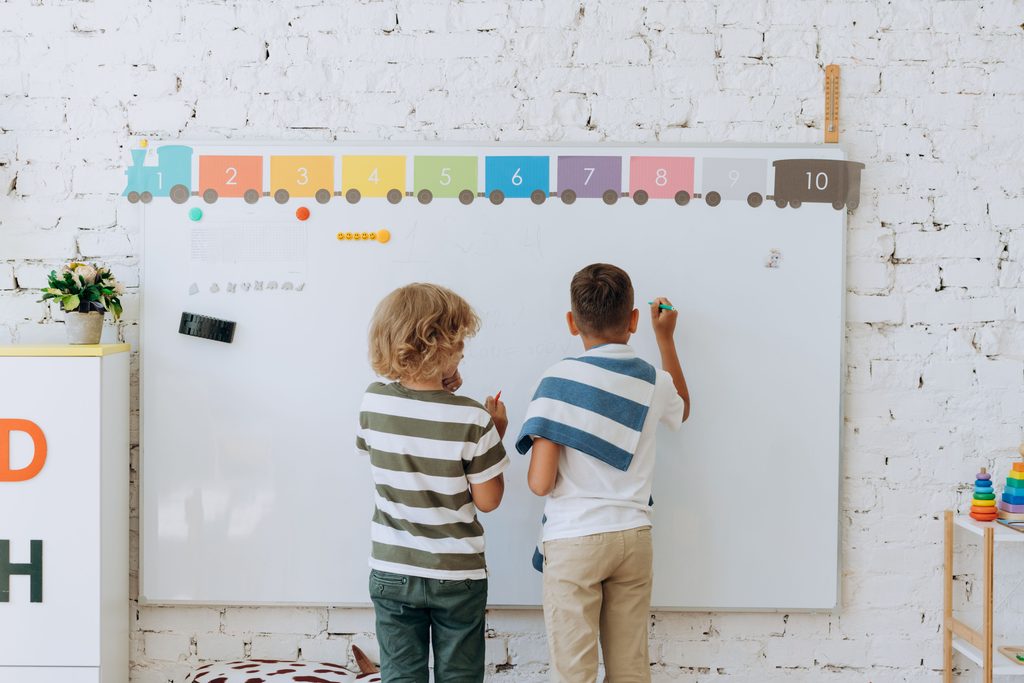
At Yoyogi International School, English is the primary language of instruction, and learning is designed to encourage children to inquire, explore, and express their ideas. Through inquiry-based learning within the International Baccalaureate (IB) Primary Years Programme (PYP), students use English not simply as a subject to be studied, but as a language for thinking, investigating, and communicating their ideas throughout the school day.
Small class sizes also allow the school to provide support that reflects each student’s English proficiency and learning needs. Japanese is integrated into the curriculum as well, providing students with opportunities to continue developing their Japanese while learning primarily through English.
Beginning English education during early childhood can offer certain advantages, particularly while the brain and auditory system are developing rapidly and children are highly receptive to the sounds and rhythms of language. This does not mean, however, that English must be introduced in early childhood for a child to acquire it successfully. The age at which learning begins is only one consideration. Equally important is an environment in which the child can continue engaging with English naturally and consistently.
Sustaining English education over time requires both enjoyment and continuity, while Japanese development also deserves careful attention. The aim is not to prioritize one language at the expense of the other, but to support both in ways appropriate to the child’s growth.
Alongside learning at home, an international school can provide an environment in which children use English as part of their everyday learning and communication. Whatever approach a family chooses, it is important to consider the child’s age, interests, and language environment and to select an approach that can be sustained over time.


Kaname Kawamoto
Yoyogi International School | Business Division & Admissions Manager
Drawing from experience sending children to an international school abroad, deepened understanding of progressive education, such as the IB program, and earned an Elementary School Teaching License. Brings this passion and expertise to the current role.