





Choosing an international school for a child’s primary education involves more than simply identifying schools within a convenient area. International schools in Tokyo differ in their curricula, educational philosophies, tuition fees, language environments, and approaches to teaching and learning. Understanding these differences is an important first step in finding a school that is well suited to both the child and the family.
This article explains how primary grade levels at international schools relate to the Japanese school system, followed by an overview of international school options in different areas of Tokyo. It also considers the benefits and practical considerations of beginning an international education at the primary level, six important factors to examine when comparing schools, and the Primary Years Programme (PYP) at Yoyogi International School.
Japanese elementary school comprises Grades 1 through 6. International schools, however, use different grade structures and terminology depending on the educational system they follow. Schools based on the American system generally use “Grade,” while those following the British system commonly use “Year.”
The International Baccalaureate (IB) Primary Years Programme (PYP) is designed for students aged 3 to 12. Many international schools also provide early childhood education before the primary years, often through Kindergarten or other early years programmes.
Grade placement and entry ages vary among schools. Parents should therefore confirm directly with each school which grade corresponds to their child’s age when considering admission.

International schools are located across Tokyo, with a number of schools situated in central districts such as Shibuya and Minato. Educational philosophy, curriculum, school size, and transportation arrangements vary considerably among schools. Location is therefore one factor in school selection, alongside the type of educational environment a family considers appropriate for its child.
The following sections outline some of the characteristics of international schools in different areas of Tokyo.
Shibuya and Minato are home to a number of international schools. Both districts are well served by rail and bus networks, which can make daily travel and school drop-off more manageable depending on where a family lives and where parents work.
In Shibuya, international schools can be found in areas including Yoyogi, Hiroo, and Shoto, with some offering programmes from early childhood through the primary years. In Minato, schools are located in and around areas such as Roppongi, Moto-Azabu, and Hiroo and include institutions following British, American, IB, and other educational frameworks.
When considering a centrally located school, the distance from home is only one part of the practical picture. Available transportation, school bus arrangements, and the actual time required for the daily journey can all affect how comfortably school fits into family life.
Setagaya has international schools with relatively spacious campuses, some of which provide extracurricular opportunities in areas such as sport, art, and music. Schools in Nerima and Koto also include institutions associated with particular national curricula, educational philosophies, or religious traditions. For families with clear educational priorities, it can help to start with the curriculum and educational philosophy that best suit the child, then determine which schools are within a practical commuting distance. This approach allows educational considerations to guide the search before location narrows the available options.
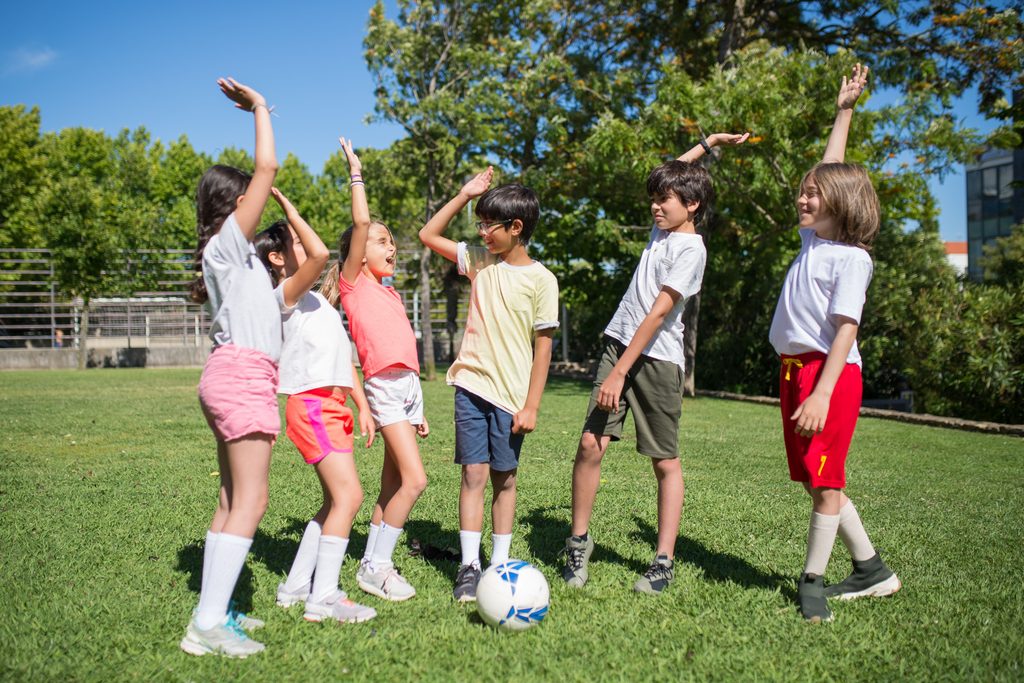
An international primary education can give children opportunities not only to learn English, but also to use English as a language for learning across the curriculum. Depending on the school and its educational approach, students may also be encouraged to formulate questions, develop their own ideas, and learn alongside peers with different perspectives and cultural backgrounds. The following are some of the main benefits of an international education during the primary years.
At many international schools, English is not taught solely as a language subject. Students also use English to learn mathematics, science, and other areas of the curriculum. As a result, English becomes part of everyday academic learning as students listen, think, ask questions, and communicate with teachers and classmates.
This experience extends beyond learning vocabulary and grammar. Students use English to understand subject content, explain ideas, and participate in classroom learning. Starting this process in the primary years gives children sustained experience using English as a language of learning.
Approaches to teaching differ among international schools and curricula. Some place particular emphasis on developing understanding through questioning, discussion, and active engagement with ideas alongside the acquisition of knowledge.
The IB PYP, for example, places inquiry at the centre of learning. Students develop questions and deepen their understanding by engaging with information, ideas, and different perspectives. Expressing their own thinking and listening carefully to the thinking of others can encourage students to reconsider, refine, and extend their understanding.
Many international schools bring together students from a range of national, linguistic, and cultural backgrounds. Daily learning and interaction can therefore expose children to different languages, customs, perspectives, and ways of understanding the world.
These experiences can help children recognise that familiar assumptions and practices are not necessarily universal. Learning to understand different perspectives and engage respectfully with others provides an important foundation for learning and collaborating with people from diverse backgrounds.

When considering an international school, families should look beyond English as the principal language of instruction. The place of Japanese within the curriculum, the languages used in everyday school life, and communication between the school and parents are also important considerations.
During the primary years in particular, school and family life are closely connected. It is therefore useful to consider not only the educational environment provided for the child, but also how parents may need to support the child’s learning and school experience.
At international schools where English is the principal language of instruction, students may spend less time learning in Japanese than they would in a Japanese school. Opportunities to develop Japanese vocabulary, kanji, reading and writing, and knowledge of subjects such as Japanese history and geography vary by school curriculum.
The amount and level of Japanese a child needs will also depend on the family’s language environment and longer-term educational plans. Families considering a future transition to a Japanese school or university should review the school’s Japanese-language provision and consider how reading and other forms of Japanese-language learning might be supported at home when needed.
Attending an international school does not necessarily mean that English is used in every aspect of school life. Depending on the linguistic backgrounds of the students, Japanese or other languages may be used among friends during breaks, after school, or in other informal settings.
Families for whom the English-language environment is an important consideration may therefore wish to understand not only the language of classroom instruction, but also the broader linguistic environment of the school. A school visit can provide useful insight into how teachers and students communicate and how students interact with one another during the school day.
At some international schools, communication with parents takes place primarily in English. This may include school notices, parent-teacher conferences, events, and other exchanges concerning a child’s learning and school life. Parents who are less confident communicating in English may wish to ask whether Japanese-language support is available and which languages are used for written communication and parent-teacher conferences. Understanding these arrangements before enrolment can help families anticipate how communication with the school will work in practice.

Tokyo offers a wide range of international schools serving primary-age students. Curricula, educational philosophies, school size, language provision, and tuition fees differ from one school to another. A school’s reputation and location provide only part of the information needed to make a decision. Parents should also consider how the school’s educational approach fits their child’s learning style, the child’s individual educational needs, and the family’s longer-term plans.
International schools may follow the IB PYP, a British curriculum, an American curriculum, or another educational framework. These approaches can differ in curriculum content, methods of teaching, and approaches to assessment.
Understanding a curriculum involves more than recognising its name. Parents should consider the educational principles on which learning is structured, how students are taught, and how their progress and achievement are assessed. Longer-term educational plans may also make it important to understand how the current curriculum connects with subsequent stages of education.
Clarifying what the family values educationally and the type of environment in which the child learns most effectively provides a useful basis for comparing different curricular approaches and schools.
A school must receive authorisation from the International Baccalaureate to offer the PYP as an authorised IB programme. An authorised PYP school implements the programme in accordance with the requirements established by the IB.
Families specifically seeking an IB education should confirm whether a school is an authorised PYP school or a candidate school working toward authorisation. Current authorisation status can be checked through official IB sources.
The educational quality of a school is important, as is the effect of the daily journey on a child’s routine. For primary-age children, a lengthy commute can affect time available for sleep, family life, activities, and rest after school.
Parents should consider the total journey time from home, available forms of transportation, the number of transfers required, the route between the station or bus stop and the school, and whether school bus transportation is available. Where possible, travelling the route during the actual morning commute can provide a more realistic understanding of what the journey will involve each day.
School size and class size can influence both the learning environment and the nature of relationships between teachers and students. Larger schools may offer extensive facilities and a broad range of subjects, sports, and extracurricular activities. Smaller schools may provide an environment in which teachers have greater opportunities to know individual students and understand their learning and school experience closely.
The number of students alone, however, provides an incomplete picture. Teacher staffing, classroom organisation, and the support available for students’ academic, language, social, and emotional needs are equally important when evaluating the learning environment.
The place of Japanese within the curriculum differs considerably among international schools. Some schools incorporate Japanese into the formal curriculum, while the number of lessons, grade levels served, and approaches to instruction according to language proficiency can vary.
The level of Japanese a family hopes a child will develop is closely related to the family’s linguistic environment and longer-term educational plans. Families considering Japanese schools or universities in the future should examine the content and level of Japanese-language instruction and consider whether additional learning outside school may also be appropriate.
Tuition fees vary considerably among international schools. Families may also need to account for application or enrolment fees, facility fees, learning materials, school transportation, extracurricular activities, and other expenses.
Financial planning is therefore more meaningful when it considers the anticipated period of enrolment rather than tuition for a single year. The longer-term picture will also differ according to whether a child is expected to continue in international education through middle and high school or later move to a Japanese school or a school overseas.
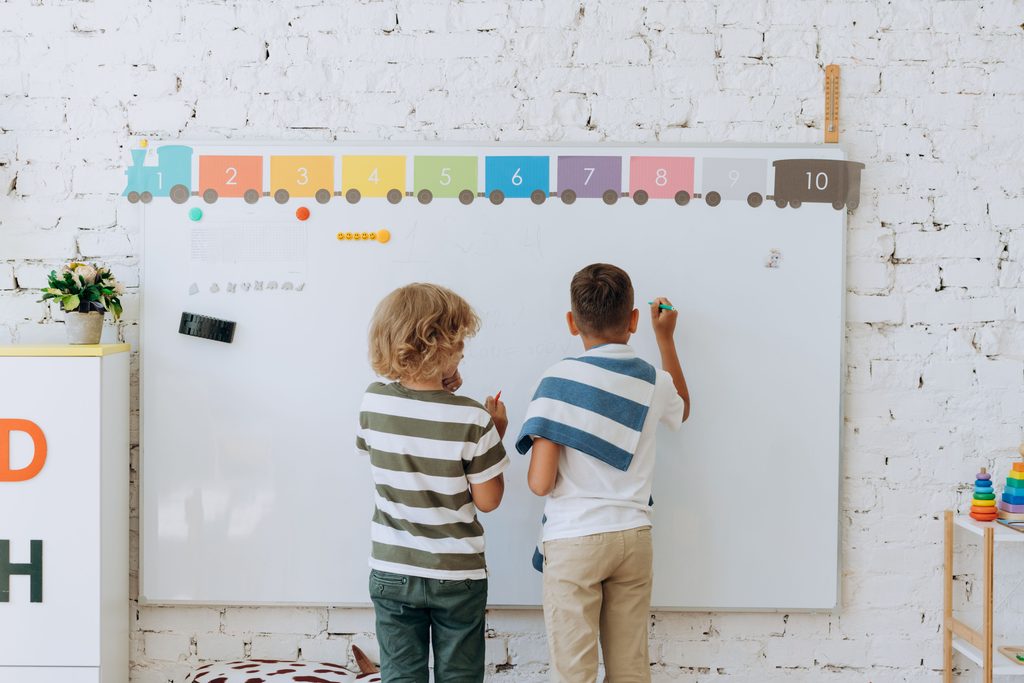
Yoyogi International School is an authorised International Baccalaureate Primary Years Programme (PYP) school. At the primary level, English is the principal language of instruction. Within the PYP framework, students engage in inquiry-based learning that encompasses language, mathematics, science and social studies content, together with information technology, physical education, music, and visual arts.
The PYP places importance on the acquisition of knowledge as well as the process through which students develop understanding. Students learn to formulate questions, investigate ideas, and deepen their thinking. Expressing their own ideas and engaging with the perspectives of others form an important part of the inquiry process.
Japanese is also included in the curriculum. Instruction differs for students who speak Japanese as their first language and those who are learning Japanese as an additional language, allowing students to develop their Japanese according to their level of language proficiency.
An international education during the primary years can provide children with experience in learning academic subjects through English, expressing their ideas, and learning alongside people from different backgrounds. The nature of that experience, however, depends on the school’s curriculum, educational philosophy, and language environment.
When comparing schools, parents should examine the curriculum, Japanese-language provision, class size, commuting arrangements, and the full cost of attendance. It is also important to consider how the primary years connect with later stages of education and the range of academic pathways that may follow.
School websites and published materials provide essential information about educational philosophy, curriculum, tuition, and admissions requirements. A school visit adds another dimension by allowing parents to observe classroom teaching, teacher-student relationships, and the ways in which students participate in learning. The relationship between a school’s stated educational principles and the way those principles are reflected in daily practice is an important part of understanding the education a school actually provides.

Kaname Kawamoto
Yoyogi International School | Business Division & Admissions Manager
Drawing from experience sending children to an international school abroad, deepened understanding of progressive education, such as the IB program, and earned an Elementary School Teaching License. Brings this passion and expertise to the current role.