

The IB (International Baccalaureate) is an educational programme implemented around the world that uses inquiry-based learning to develop student agency, critical thinking, and an international perspective. In recent years, the number of IB World Schools in Japan has also increased, making IB education available in a wider range of settings, including public and private schools and international schools.
At the same time, families may still wonder how the IB differs from more conventional approaches to schooling, what kinds of abilities it develops, and whether all IB World Schools provide the same educational experience.
This article explains the philosophy of the IB, its four programmes, its distinctive educational approach, and the role of IB World Schools. It also considers the benefits of an IB education, points to understand before choosing it, and important factors to consider when selecting a school.
The IB (International Baccalaureate) is an educational programme that places particular emphasis on developing internationally minded learners who can think for themselves and continue learning throughout their lives.
A defining feature of IB education is that it is concerned with more than the amount of knowledge a student acquires. It values the process through which students ask questions, investigate independently, encounter different perspectives, and gradually deepen their own understanding.
The foundations of the IB were developed in the 1960s, principally in Geneva, Switzerland, where many international organisations were based. As increasing numbers of families lived and worked across national borders, there was a growing need for an education and university entrance qualification that could provide continuity across different national education systems.
The IB subsequently developed beyond the provision of an internationally recognised university entrance qualification. Its educational mission came to include the development of people who understand different cultures and perspectives and who can contribute to a better and more peaceful world.
That philosophy remains at the heart of IB education today.
The IB mission reflects a commitment to developing people who, through intercultural understanding and respect, can contribute to a better and more peaceful world.
The IB Learner Profile translates this philosophy into ten attributes that describe the qualities the IB seeks to develop in learners.
These include being inquiring, thoughtful, communicative, open-minded, caring, and reflective.
Importantly, these qualities are not separate objectives added to academic learning. One of the strengths of IB education is its intention to develop knowledge, thinking, relationships with others, and the capacity for self-reflection through the learning process itself.

IB education consists of four programmes designed for different ages and stages of development.
Although their content and approaches vary, the programmes share a consistent philosophy: students are encouraged to ask questions, think independently, reflect on their learning, and deepen their understanding.
The Primary Years Programme (PYP) is designed for children in the early years and primary stages of education.
A central feature of the PYP is inquiry-based learning that begins with a child’s natural desire to know, explore, and ask why.
Rather than treating learning as something confined to separate subjects, the PYP frequently encourages students to explore connections across disciplines, themes, and real-life contexts.
Children are not regarded simply as recipients of information from teachers. They are encouraged to ask questions, think, investigate, and exchange ideas with others. Through these experiences, they begin to develop the foundations of independent and purposeful learning.
The Middle Years Programme (MYP) is designed primarily for students from approximately 11 to 16 years of age.
At this important stage of adolescence, the programme encourages students to consider the relationship between what they learn in individual subjects and the wider world in which they live.
The emphasis therefore extends beyond what students know to how they use that knowledge and how they think when faced with different contexts and situations.
Students also develop their ability to organise their ideas logically, understand the perspectives of others, communicate their own thinking, and reconsider their views when appropriate.
The Diploma Programme (DP) is a two-year programme for students approximately 16 to 19 years of age who are preparing for university and further study.
It is the most internationally recognised of the four IB programmes. Students complete prescribed subjects and core requirements and, upon meeting the required assessment standards, may earn the IB Diploma.
In addition to a broad academic curriculum, DP students undertake the Extended Essay, Theory of Knowledge (TOK), and Creativity, Activity, Service (CAS).
The programme therefore requires more than academic knowledge. Students are expected to develop the ability to research, think critically and logically, communicate ideas in writing, and work independently—abilities that are highly relevant to university-level study.
The Career-related Programme (CP) combines IB education with learning connected to future careers and specialised fields.
Unlike the DP, which is principally designed around preparation for university study, the CP integrates career-related learning with selected IB courses and the CP core.
Alongside specialised knowledge and practical skills, the programme places importance on broader abilities such as communication, self-management, and intercultural understanding—qualities that are valuable across a wide range of future environments.

To understand IB education, it is important to consider not only what students learn, but how they learn.
Inquiry-based teaching and student-centred learning are, of course, also found in many non-IB schools. It would therefore be misleading to draw a simple distinction in which conventional education is characterised by memorisation while the IB is characterised by thinking.
What distinguishes the IB is the systematic way in which inquiry, conceptual understanding, reflection, and international-mindedness are embedded throughout its programmes.
In IB education, learning is not based solely on teachers providing students with predetermined answers. Students are encouraged to develop questions of their own.
Why does this happen? Could there be another way of looking at it? What do I think, and why?
Questions such as these can lead to investigation and discussion. As students acquire new knowledge, that knowledge may in turn lead to further questions and deeper learning.
The teacher’s role is therefore broader than transmitting information. Teachers guide thinking, pose purposeful questions, and help students move towards deeper understanding.
Through repeated experience of this kind, students develop greater independence as learners and become more capable of explaining their ideas with reason and evidence.
The IB identifies ten Learner Profile attributes that express the qualities it seeks to develop through education:
• Inquirers
• Knowledgeable
• Thinkers
• Communicators
• Principled
• Open-minded
• Caring
• Risk-takers
• Balanced
• Reflective
These attributes are not intended to place children into ten fixed categories or to prescribe a single ideal personality.
Rather, they describe attitudes and dispositions that are valuable when learning, relating to others, making decisions, and reflecting on oneself.
The Learner Profile illustrates an important principle of IB education: academic development and personal growth are not treated as entirely separate processes, but as interconnected aspects of becoming a thoughtful and capable learner.

An IB World School is a school authorised by the International Baccalaureate (IB) to offer one or more IB programmes.
However, the designation “IB World School” should not be the only factor used to judge a school. Even when schools offer the same IB programme, the educational experience can differ according to the school’s philosophy and culture, its teachers, student community, language environment, and other characteristics.
To offer an IB programme, a school must prepare in accordance with IB requirements and successfully complete the authorisation process.
The process extends beyond curriculum design. Schools are expected to demonstrate how the IB philosophy is understood across the school, whether teachers have appropriate professional development, and whether the structures and resources required to implement the programme are in place.
Authorisation should not be regarded as an endpoint. An IB World School is expected to continue reflecting on and developing the quality of its educational provision.
The number of IB World Schools in Japan has continued to increase. As of March 2026, 265 schools had been authorised (Source: Ministry of Education, Culture, Sports, Science and Technology, IB Education Promotion Consortium).
In Japan, schools include those defined as Article 1 schools under the School Education Act and non-Article 1 schools, including many international schools. Their legal and educational status differs.
For families considering future qualifications and university pathways, it is therefore important not to look only at whether a school is an IB World School, but also to confirm what qualifications students can obtain and what pathways are available after graduation.
IB education is offered in a variety of settings, including public schools, private schools, and international schools.
When choosing a school, IB authorisation alone should not be the deciding factor.
Families should consider which IB programme the school offers, how the school translates the IB philosophy into everyday teaching and learning, how teachers interact with students, and whether the educational environment is a good fit for the individual child.
In international schools in particular, learning alongside students from a wide range of cultural and linguistic backgrounds can itself be an important part of the educational experience.
When visiting a school, it is therefore worthwhile to look beyond curriculum descriptions and observe the classrooms, the students, the relationships within the community, and the overall atmosphere of the school.

IB education does not treat the acquisition of knowledge and the ability to think as separate aims.
Students learn to use what they know, express their ideas, listen to the perspectives of others, and reconsider their own thinking when appropriate. Repeated experiences of this kind can develop abilities that continue to support learning well beyond school.
In inquiry-based learning, there is not always a single predetermined answer.
Students formulate questions, gather information, consider the reliability of their sources, compare different perspectives, and develop conclusions of their own.
Through discussions, presentations, reports, and other forms of communication, they also gain experience in explaining their thinking to others.
Such learning can foster student agency, critical thinking, and the ability to approach problems thoughtfully and constructively.
One of the principles valued by the IB is the ability to understand and respect different cultures and perspectives.
It is important, however, to recognise that IB education is not synonymous with English-language education.
The IB is an international educational framework; learning English is not, in itself, the purpose of the programme.
When students study the IB in an international school where English is the language of instruction, however, they regularly use English for academic learning, inquiry, discussion, and presentations. This can provide substantial opportunities to develop practical and academic English skills.
The characteristics of IB education itself and the benefits of studying the IB in an English-language environment should therefore be understood as related but distinct.
The IB Diploma is recognised by many universities around the world as a university entrance qualification and can be an important option for students considering higher education overseas.
In Japan, there are also universities and admissions systems that recognise IB results and the educational experience associated with the programme.
This does not mean, however, that earning the IB Diploma guarantees admission to a student’s preferred university. Entry requirements, required scores, and subject prerequisites vary among institutions, making it important to investigate university requirements well in advance.

IB education offers many educational advantages, but it should not be assumed that the same approach will suit every child equally well.
Rather than choosing a programme because of its name or reputation alone, families should consider the child’s individual characteristics and approach to learning, future educational pathways, and what the family values in education.
IB programmes, particularly the DP, include reports, essays, presentations, and longer-term assignments in addition to regular classroom learning.
Success therefore depends on more than academic ability. Students also need to manage their time, organise competing responsibilities, and establish priorities.
These self-management skills can themselves develop through education, but families considering the DP should have a realistic understanding of the workload and of the student’s individual learning style.
The IB and Japan’s general university entrance examinations differ in their approaches to learning and assessment.
Students who study within the IB while also planning to take conventional Japanese university entrance examinations may therefore require additional preparation according to their intended university and admissions route.
The preparation required will differ depending on whether a student is considering a Japanese university, an IB-based admissions route, or a university overseas. At the middle and high school levels, the quality of a school’s university and career guidance is therefore another important consideration.
The cost of receiving an IB education varies considerably according to the type of school.
At private schools and international schools in particular, families may need to consider not only tuition but also facility fees, learning materials, activity fees, and other costs.
Families considering university overseas should also take a longer-term view of educational expenses, including university tuition and living costs. When selecting a school, it is therefore sensible to understand the full financial commitment alongside the educational programme itself.

The IB (International Baccalaureate) is an educational programme that values the process of asking questions, thinking independently, engaging with others, and deepening understanding.
Its value lies not simply in how much knowledge students acquire, but in how they learn to think about that knowledge, use it meaningfully, and allow it to lead them towards new questions.
At the same time, an IB World School designation does not mean that every school provides an identical educational experience. A school’s philosophy and culture, its teachers, language environment, community, and approach to future pathways all influence a child’s experience of education.
Yoyogi International School is an IB World School offering the Primary Years Programme (PYP), where inquiry-based learning encourages children to ask questions, think independently, and deepen their understanding.
Within a community of children from diverse cultural backgrounds, we value both the confidence to develop and express one’s own ideas and the capacity to understand and respect perspectives that may be different from one’s own.
For families considering an IB education or choosing a school, I believe it is important to look beyond the name of the programme and consider the environment in which a child will actually learn: how they will learn, who they will learn with, and the relationships and experiences that will shape their education.




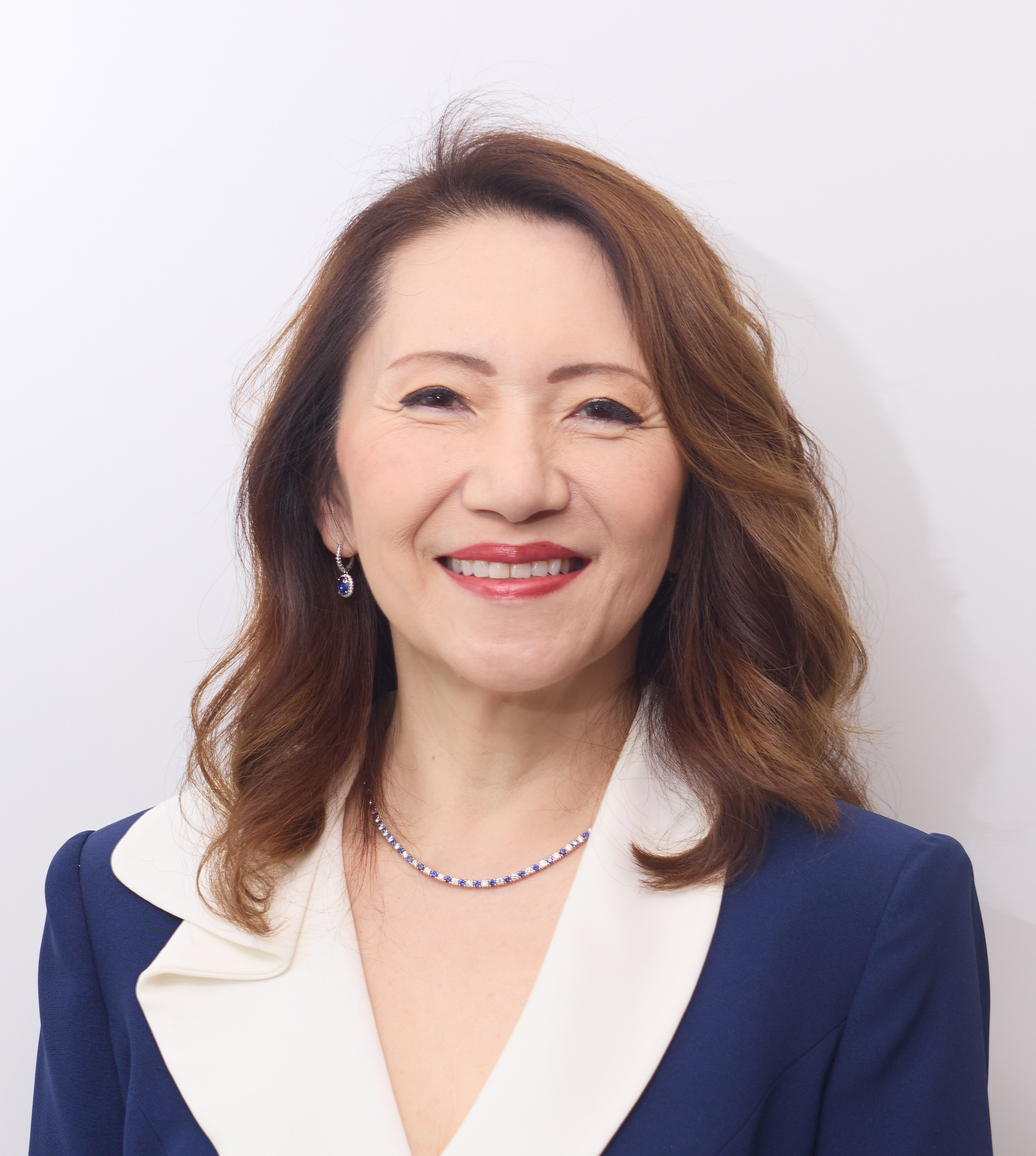
Yuko Muir
Doctor in International Psychology
Yoyogi International School | Founder and CEO
Founder and CEO of Yoyogi International School with over 27 years of experience in school leadership. Holds a Ph.D. in International Psychology and draws on extensive practical and academic background to explore key issues in education.