





Choosing an international school in Tokyo involves more than examining its educational philosophy. Location, daily travel, English-language support, and future academic pathways can all shape a family’s decision.
This article considers how international schools differ across several key areas of Tokyo, including their surrounding communities and accessibility. It then examines the factors that merit closer attention when evaluating a school and outlines practical steps in the search process.
The characteristics of an international school are often influenced by its location. The surrounding community and the practicalities of the daily commute also vary considerably across Tokyo. Central districts offer a concentration of schools with diverse educational philosophies, while residential and suburban areas may provide larger campuses with more extensive facilities. The following sections examine some of the distinguishing features of Tokyo’s principal areas.
Minato has one of the highest concentrations of international schools in Tokyo. Areas such as Roppongi, Moto-Azabu, Hiroo, and Minami-Azabu are home to substantial international communities and offer a broad range of educational options, from long-established international schools to preschools for younger children.
Schools in the area include British and American institutions as well as those with religious foundations. Their educational philosophies, curricula, school cultures, and student demographics vary accordingly. Many are large, well-established institutions, and demand can be high in particular grades. Places may therefore fill early. Families considering these schools will benefit from understanding both the admissions timeline and place availability well in advance.
International schools can be found across Shibuya, including Yoyogi, Hiroo, and Shoto. The district is well connected to major transportation hubs, making public transport a practical option for many students depending on where they live.
Shibuya’s educational setting extends beyond its central location. Cultural, artistic, and public institutions are distributed throughout the district, while Yoyogi Park, in particular, offers schools in the surrounding area access to an extensive natural environment within central Tokyo. These resources can become part of the curriculum when they have educational relevance, allowing students to engage with the wider social, cultural, and physical context in which learning takes place.
The district also offers frequent exposure to different cultures and perspectives. This combination of urban accessibility and opportunities for learning beyond the campus is one of Shibuya’s distinctive characteristics.
Several international schools in Setagaya and Meguro are situated within quieter residential neighbourhoods. Some occupy larger sites than are typically available in central Tokyo, creating greater scope for sports, art, music, theatre, and other activities.
Accessibility is only one dimension of a school’s location. The setting in which children spend much of their day also deserves consideration. A relatively spacious campus within a settled residential community is a feature of schools in these areas.
Larger international schools can also be found outside central Tokyo, including in Chofu. Some international schools in these areas operate school bus services from central Tokyo, making suburban schools accessible to families living in the city.
Suburban campuses may use their larger sites to provide extensive sports facilities and educational resources. Travel time, however, can be longer. The educational advantages of a suburban campus therefore need to be considered alongside the demands of the daily commute.
The choice between an urban and a suburban school will depend on the child’s age, where the family lives, and the educational environment the family is seeking. For younger children, the length of the commute deserves particular attention, given its potential impact on their energy and daily routine.

Careful school selection involves more than examining the curriculum. Accreditation, accessibility, English-language support, school size, and future academic pathways also warrant consideration. The following six areas provide a framework for evaluating these aspects of a school.
Curricula vary among international schools in Tokyo. Depending on the school, these may include the International Baccalaureate (IB), British curricula, or American curricula.
The International Baccalaureate (IB) is an international education programme adopted by schools around the world. It includes the Primary Years Programme (PYP), Middle Years Programme (MYP), and Diploma Programme (DP), each designed for a different stage of a student’s education. Inquiry is central to the IB approach. Not every IB World School is authorised to offer all IB programmes. Authorisation is granted separately for each programme, so the scope of a school’s IB provision may vary .
British-system schools may offer the International General Certificate of Secondary Education (IGCSE), an internationally recognised secondary qualification, followed by A-Levels (Advanced Levels), which are widely used for university entrance. American-system schools generally follow US educational standards, and some schools also offer Advanced Placement (AP) courses, allowing secondary students to undertake college-level academic work.
Curriculum choice can become particularly significant for internationally mobile families. For internationally mobile families, curriculum choice can be particularly important. If a child may later move to another country or return to their home education system, continuity between curricula and the transferability of academic progress become important considerations.
Accreditation is an important indicator of whether a school meets established educational and institutional standards. For schools offering IB programmes, it is important to confirm that the school is formally authorised by the International Baccalaureate to offer the specific programme concerned.. Schools may also hold accreditation from international organisations such as the Council of International Schools (CIS) or the Western Association of Schools and Colleges (WASC), whose accreditation extends to broader aspects of the school as an institution.
Accreditation may assess more than the curriculum, extending to areas such as governance, school operations, student wellbeing, and other aspects of institutional quality. As standards and scope vary among accrediting bodies, the significance of accreditation depends on both the organisation that grants it and the areas it evaluates.
Accreditation can therefore be relevant at any stage of a child’s education, not only when considering future university pathways. It provides an additional basis for understanding the standards against which a school’s educational provision and institutional practices have been independently evaluated.
The practicalities of daily travel are an important part of school selection. The first consideration is whether the route and mode of transportation are safe and appropriate for the child’s age. Travel time is equally important, particularly when a long commute places unnecessary demands on the child’s energy or daily routine.
Schools in central Tokyo often benefit from extensive public transport networks. Depending on the child’s age, a parent or caregiver may need to accompany the child to and from school. For households in which both parents work, transportation arrangements can be particularly important. The availability of a school bus, arrival and departure times, after-school care, and extracurricular schedules can all influence how families manage daily transportation.
Some suburban schools operate bus services from central Tokyo, making them accessible to families living in the city. Travel times can vary considerably by route, and the amount of time a child can reasonably spend commuting will depend on their age and daily schedule.
A child’s level of English at the time of application is an important consideration for parents considering an international school. International schools differ in the level of English proficiency expected at admission and in the support available to students who are continuing to develop their English. International schools that provide English as an Additional Language (EAL) support also vary in the grade levels for which EAL support is available, the form of instruction provided, and the length of time students may receive such support.
As students advance through the grade levels, English plays an increasingly important role in academic learning. Students are expected to use English to understand subject content, express increasingly complex ideas, and participate in classroom learning. International schools may therefore require a higher level of English proficiency for admission to the upper grade levels..
A child’s English proficiency needs to be considered in the context of age, grade level, and previous educational experience. The availability and nature of language support vary among international schools and remain important as students progress academically.
International schools in Tokyo vary considerably in size, from schools with more than 1,000 students to schools with relatively small student populations. Larger international schools often provide a broad range of academic subjects, extracurricular activities, and specialised programmes. In smaller international schools, teachers may have more opportunities to know individual students closely, while students may develop relationships across different grade levels.
School size does not, by itself, indicate the quality of education. The educational environment needs to be considered in relation to the child’s personality, approach to learning, and individual needs, as well as the expectations parents have for their child’s education and school community.
Visiting an international school provides an opportunity to observe aspects of the educational environment that cannot be fully understood through a website or written information. Interactions between teachers and students, students’ engagement in learning, and relationships within the school community can reveal how educational principles are reflected in everyday practice.
Long-term academic pathways also shape the school-selection process. Families primarily considering universities overseas may examine different curricula and qualifications from those who wish to retain Japanese universities as an option.
For younger children, future pathways are often not yet clearly defined. In such cases, the question is less about selecting a predetermined destination and more about whether the educational pathway preserves a meaningful range of future possibilities.
Graduation credentials, the destinations of former students, and the nature of university guidance all provide useful context. Together, they help families understand how a school supports the transition from secondary education to the next stage of a student’s academic life.。

A school search often begins by clarifying what the family is seeking from a school. Availability and timing then need to be understood, followed by closer engagement with the educational setting itself. The following three steps provide a practical structure for that process.
Before beginning the search, it is useful to clarify six areas within the family:
Parents also need to consider what they value most in their child’s education and school environment. No single school is likely to meet every preference. Clarifying the child’s needs and the parents’ educational priorities before visiting a school allows the educational programme, learning environment, and school culture to be considered with greater clarity.
Financial planning also needs to extend beyond tuition. Admission fees, facility fees, school transportation, meals, and extracurricular activities can all contribute to the total cost of attendance. Understanding the full range of expenses provides a more accurate picture of the annual cost of each school.
Once parents have identified an international school that appears to align with their educational priorities, the next practical question is whether a place is available in the appropriate grade. Enrolment opportunities vary according to the school, grade level, and time of year. International schools may accept students during the academic year, while individual grades may reach capacity and maintain waiting lists.
Early confirmation of the current enrolment status gives parents a clear understanding of whether a place is available in the appropriate grade and whether admission is possible within the intended timeframe before proceeding with a school visit or application.
Websites and published materials provide essential information about an international school’s educational philosophy, curriculum, and programmes. Written information alone cannot fully convey the quality of classroom teaching, the nature of teacher-student relationships, or the ways in which students engage with their learning. These aspects of education are more clearly observed within the school itself.
Many international schools therefore offer school tours and information sessions, giving parents an opportunity to observe the educational environment directly. Classroom interactions, approaches to teaching and learning, and the ways in which students participate in school life provide a clearer indication of how the school’s educational philosophy and curriculum are reflected in daily practice.
A curriculum defines the structure and content of an educational programme, while an educational philosophy expresses the principles on which that programme is based. The significance of both becomes evident in their implementation: in teaching, in learning, and in the relationships between teachers and students. Consistency between a school’s stated educational principles and its educational practice is an important consideration when evaluating an international school.

Yoyogi International School is located in Shibuya, one of central Tokyo’s most internationally connected districts. The School has two campuses, in Yoyogi and Jinnan. The Primary School is authorised by the International Baccalaureate (IB) to offer the Primary Years Programme (PYP). Yoyogi International School also holds accreditation from the Council of International Schools (CIS), an international organisation that promotes high standards in international education.
The Yoyogi and Jinnan campuses are accessible by public transportation from many residential areas across Tokyo. The surrounding area also provides cultural, public, and natural resources that can be incorporated into learning when relevant to the curriculum. Yoyogi Park, in particular, offers an extensive natural environment within central Tokyo and is used for educational activities when appropriate to specific learning objectives.
The Yoyogi International School community includes students from a wide range of national and cultural backgrounds. English is the common language of instruction and communication, providing a shared educational environment for students arriving from different countries and school systems. Students learn together within an international community in which different backgrounds and perspectives are a familiar part of daily school life.
Yoyogi International School provides English as an Additional Language (EAL) support for students who require additional language development. Decisions regarding EAL support take into account each student’s English proficiency, age, grade level, and previous educational experience. This allows language support to be considered within the broader context of the student’s academic development and transition into the School.
A school visit can provide parents with a clearer understanding of the educational environment, the relationships within the school community, and the ways in which the School’s educational philosophy is reflected in daily practice. Direct observation allows parents to consider these elements in relation to their child’s educational needs and experience.
International schools in Tokyo differ in their educational philosophies, curricula, size, and school cultures. Location, transportation, English-language support, and future academic pathways also vary among schools. Understanding these differences is an important part of identifying an educational environment that is appropriate for each child.
School selection begins with a clear understanding of what parents value in their child’s education. The child’s age, personality, approach to learning, and individual educational needs are important, together with the practical circumstances of family life. These factors provide a more informed basis for considering how an international school’s educational approach and environment relate to the individual child.
Curriculum, accreditation, admissions requirements, and other published information provide an essential foundation for evaluating an international school. Direct observation adds another dimension by allowing parents to see classroom practice, teacher-student relationships, students’ engagement in learning, and the culture of the school community. Consideration of future academic pathways places these immediate observations within a longer educational perspective, allowing parents to consider both the education their child will receive now and the opportunities that education may support in the years ahead.

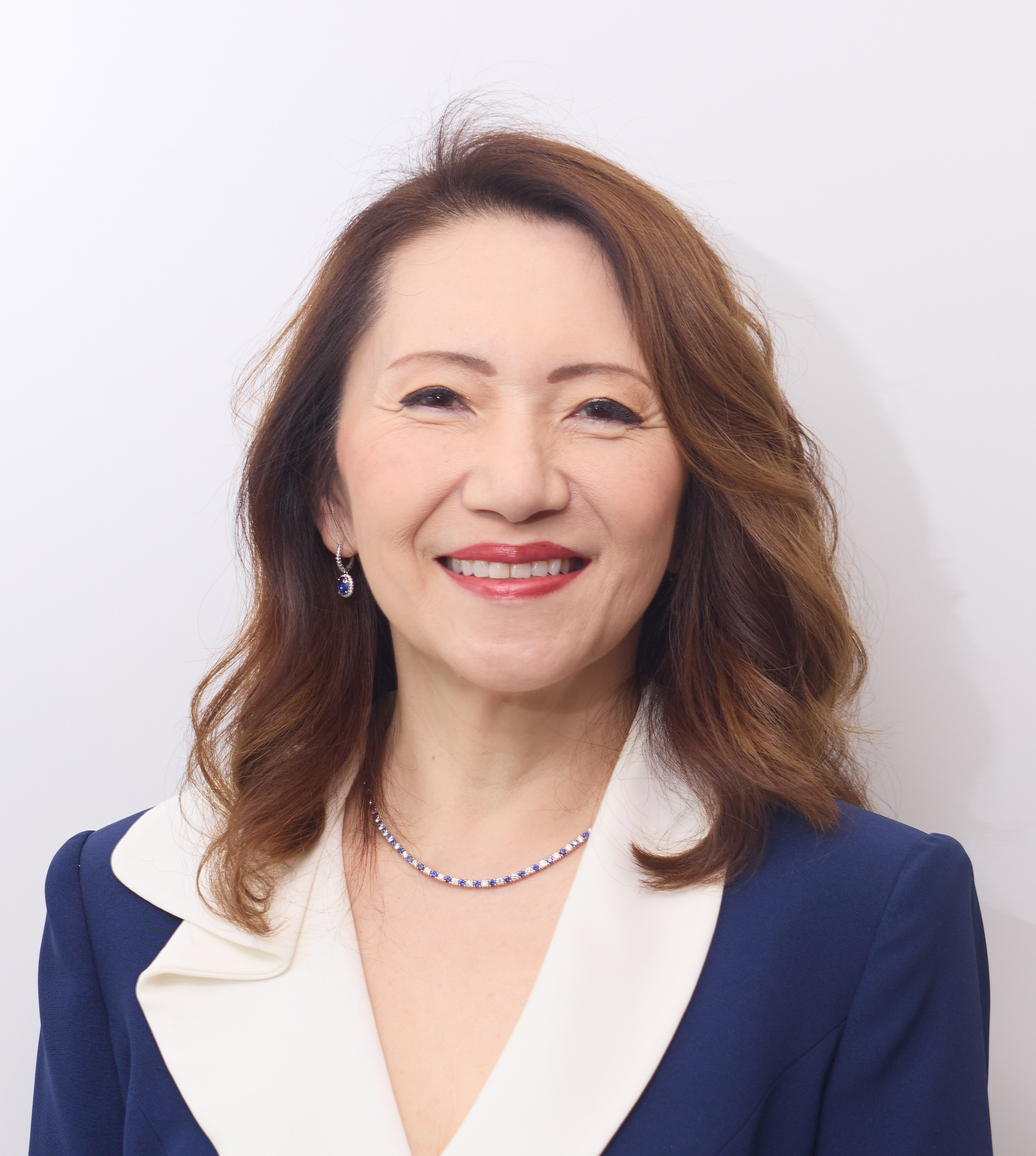
Yuko Muir
Doctor in International Psychology
Yoyogi International School | Founder and CEO
Founder and CEO of Yoyogi International School with over 27 years of experience in school leadership. Holds a Ph.D. in International Psychology and draws on extensive practical and academic background to explore key issues in education.